

Drone (UAV) Surveys capture high‑resolution aerial data using photogrammetry, LiDAR, or hybrid payloads. This data is processed into accurate maps, orthophotos, 3D models, and point clouds, enabling efficient surveying of large, complex, or inaccessible areas.
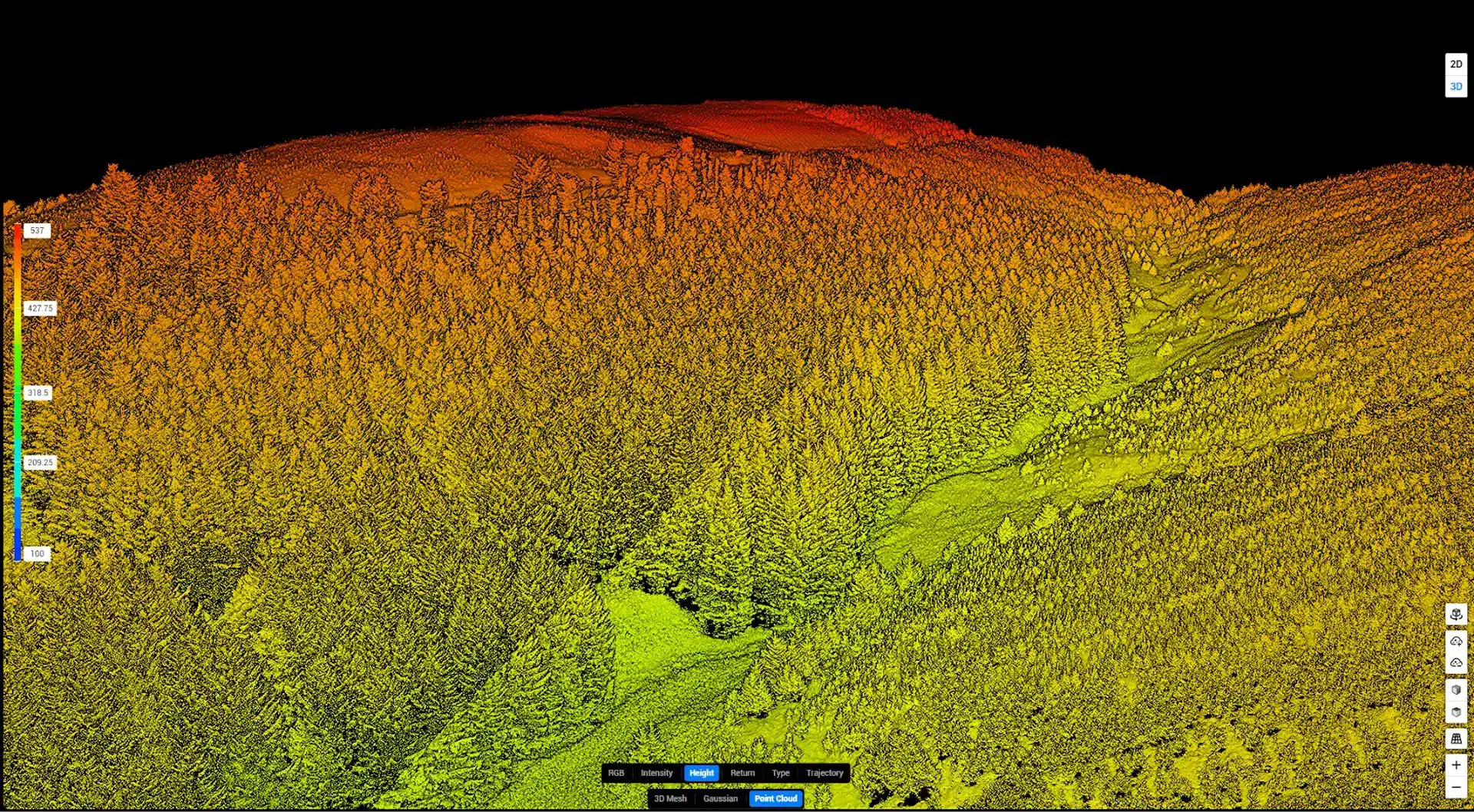
Drone surveying delivers fast, safe, and highly accurate geospatial data across large or complex sites. By combining advanced aerial sensors with professional ground control and processing workflows, drone surveys provide exceptional detail, reduce site disruption, and significantly accelerate project timelines.
Survey drones are equipped with GNSS and IMU sensors to record precise flight paths and positioning. Accuracy can be further enhanced by establishing temporary Ground Control Points (GCPs). Data is captured using photogrammetry, LiDAR, hybrid payloads, and specialised inspection sensors depending on the project requirements.
Drone surveying supports a wide range of applications across engineering, construction, asset management, and environmental monitoring. By combining high‑resolution imagery, LiDAR data, thermal information, and precise geospatial positioning, drone surveys provide fast, safe, and cost‑effective access to areas that are difficult, hazardous, or inefficient to capture using traditional methods. Whether mapping large land parcels, inspecting structures, assessing roof conditions, or generating detailed 3D models, drone technology delivers accurate, actionable data that enhances decision‑making at every project stage.
We make the surveying process simple, transparent, and stress‑free from start to finish.
Share your project requirements and site details with our team.
We prepare a clear cost estimate and project timeline based on your scope.
Our field specialists attend your site and capture the precise data you need.
Our technical team processes, analyses, and interprets your data to industry standards.
Your completed dataset, reports, and deliverables are reviewed and handed over by our survey managers.
Below are some of the most common questions clients ask about our drone services, covering accuracy, safety, compliance, deliverables, and project suitability.
Drone surveys can achieve engineering‑grade accuracy when combined with Ground Control Points (GCPs), high‑precision GNSS, and professional post‑processing workflows. For most projects, accuracy is comparable to traditional ground‑based methods.
Yes. All flights are planned and risk‑assessed in advance, and our pilots operate under strict IAA regulations. We also use labelled, compliant, and safety‑rated UAVs that undergo routine maintenance and pre‑flight checks to ensure safe operation in complex environments.
Depending on the payload, drones can capture photogrammetry imagery, LiDAR point clouds, thermal data, elevation models, orthophotos, and detailed inspection imagery for roofs, façades, and structures.
In most cases, no. Drone surveys are designed to be minimally disruptive. Our team coordinates with site managers to ensure safe flight paths while allowing normal operations to continue.
Absolutely. Drone outputs such as orthophotos, point clouds, DTMs, and CAD/BIM deliverables are widely accepted for planning submissions, engineering design, asset management, and compliance reporting.
Drone flights depend on safe weather and environmental conditions. Light wind, dry weather, and good visibility are ideal for ensuring accurate data capture. In addition, the survey area must be safe for UAV operations. This includes confirming that:
The area is not flammable
Any flammable gases have been vented, purged, or pumped off
Gas levels have been measured and confirmed safe prior to flight
No hazardous airborne materials are present
The site is free from unexpected obstructions or overhead hazards
If conditions are unsuitable — whether due to weather, airspace restrictions, or environmental risks — we reschedule promptly to maintain safety and data quality.
2 Bridge St, Athlone, Co. Westmeath, N37 F1W4
+353 (090) 640 3114
info@utilistics.ie
Mo - Fri : 08:00am - 17:30pm
Sat : 09:00am - 14:00pm