
Laser Scanning uses advanced LiDAR technology to capture millions of precise 3D measurements, generating highly accurate digital representations of buildings, structures, utilities, landscapes, and complex environments. This rich spatial data forms the foundation for engineering design, BIM modelling, digital twins, asset management, and condition assessment.
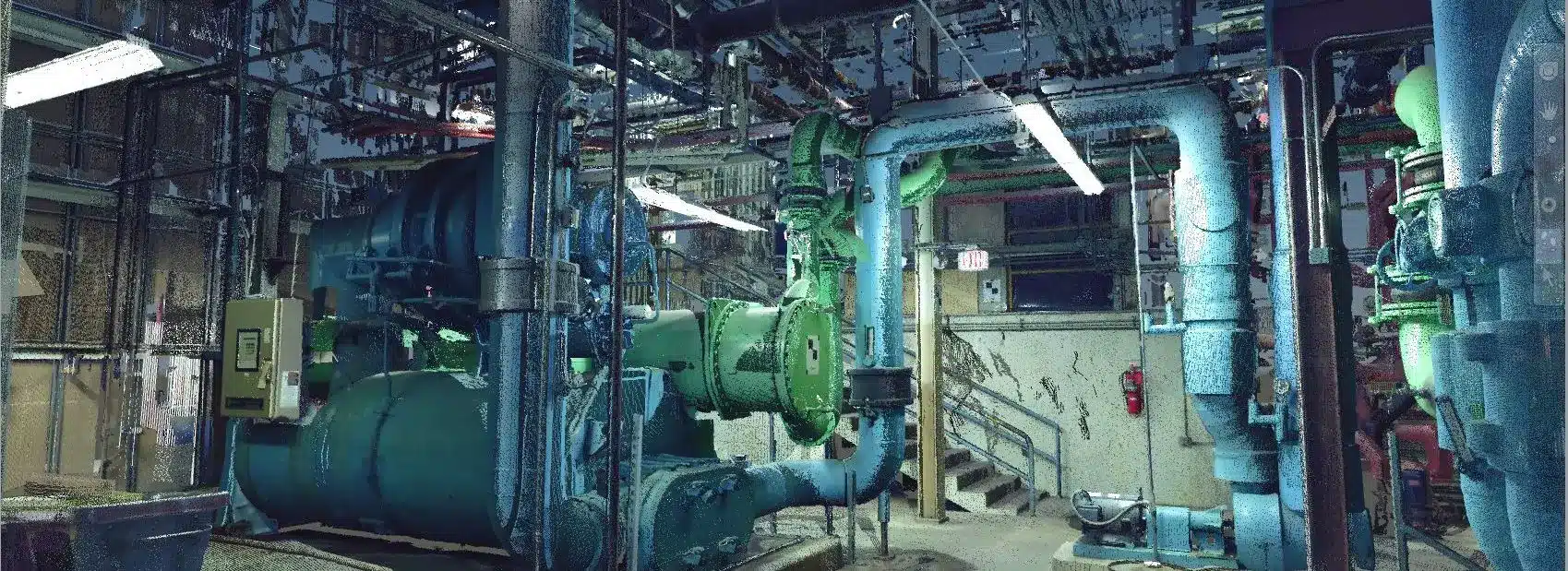
Utilistics Limited deploys a full suite of laser scanning technologies, terrestrial, mobile, drone, SLAM, and utility scanning, ensuring the right method is used for every environment, scale, and accuracy requirement.
Laser scanning delivers fast, highly accurate 3D data with minimal site disruption. It captures complete detail in a single visit, improves safety by reducing the need for physical access, and provides a reusable digital dataset that supports design, construction, and asset management throughout the entire project lifecycle.
Laser scanning supports a wide range of applications across the built and natural environment. Its ability to capture accurate, high‑density 3D data makes it ideal for design, construction, asset management, and heritage documentation. Whether used for buildings, infrastructure, utilities, or large‑scale landscapes, laser scanning provides reliable information that enhances decision‑making and streamlines project workflows.
We make the surveying process simple, transparent, and stress‑free from start to finish.
Share your project requirements and site details with our team.
We prepare a clear cost estimate and project timeline based on your scope.
Our field specialists attend your site and capture the precise data you need.
Our technical team processes, analyses, and interprets your data to industry standards.
Your completed dataset, reports, and deliverables are reviewed and handed over by our survey managers.
Below are some of the most common questions clients ask about our drone services, covering accuracy, safety, compliance, deliverables, and project suitability.
Laser scanning uses LiDAR technology to capture millions of precise 3D measurements of a site, structure, or environment. These measurements form a detailed point cloud that can be used to create CAD drawings, BIM models, digital twins, and other engineering deliverables.
We provide a full suite of scanning methods, including Terrestrial Laser Scanning (TLS), Mobile Mapping, SLAM walk‑through scanning, Drone LiDAR, and Utility/Culvert scanning. This ensures we can capture accurate 3D data in any environment, indoors, outdoors, underground, or from the air.
Laser scanning delivers highly accurate measurements, often within millimetres depending on the technology used and site conditions. It is significantly more precise than traditional surveying methods and captures far more detail in less time.
Laser scanning supports a wide range of applications, including BIM modelling, measured building surveys, digital twins, structural monitoring, heritage documentation, road and rail mapping, utility scanning, and topographic surveys. It is suitable for both small sites and large‑scale infrastructure.
Yes. Modern LiDAR systems use eye‑safe, Class 1 lasers that are safe to operate around people, traffic, and sensitive environments. Drone and mobile scanning also reduce the need for working at height or in hazardous areas.
The duration depends on the size and complexity of the site. Small buildings or rooms can often be scanned in a few hours, while larger structures, industrial facilities, or infrastructure corridors may require a full day or more. Processing and deliverables typically follow within a few days to a few weeks, depending on the level of detail required.
2 Bridge St, Athlone, Co. Westmeath, N37 F1W4
+353 (090) 640 3114
info@utilistics.ie
Mo - Fri : 08:00am - 17:30pm
Sat : 09:00am - 14:00pm