
Do You Need a Utility Survey Before You Dig? An Irish Project Guide
Understand the role of records, detection and verification before excavation, and why a utility drawing must be used within a safe system of work.
Two sites of the same size can require very different survey effort. A useful quotation explains the scope, evidence, access and deliverables behind the price, so you can compare value rather than just totals.
5 MIN READ · Editorial date 24 February 2026
Reviewed 25 September 2026 · This edition includes later research.
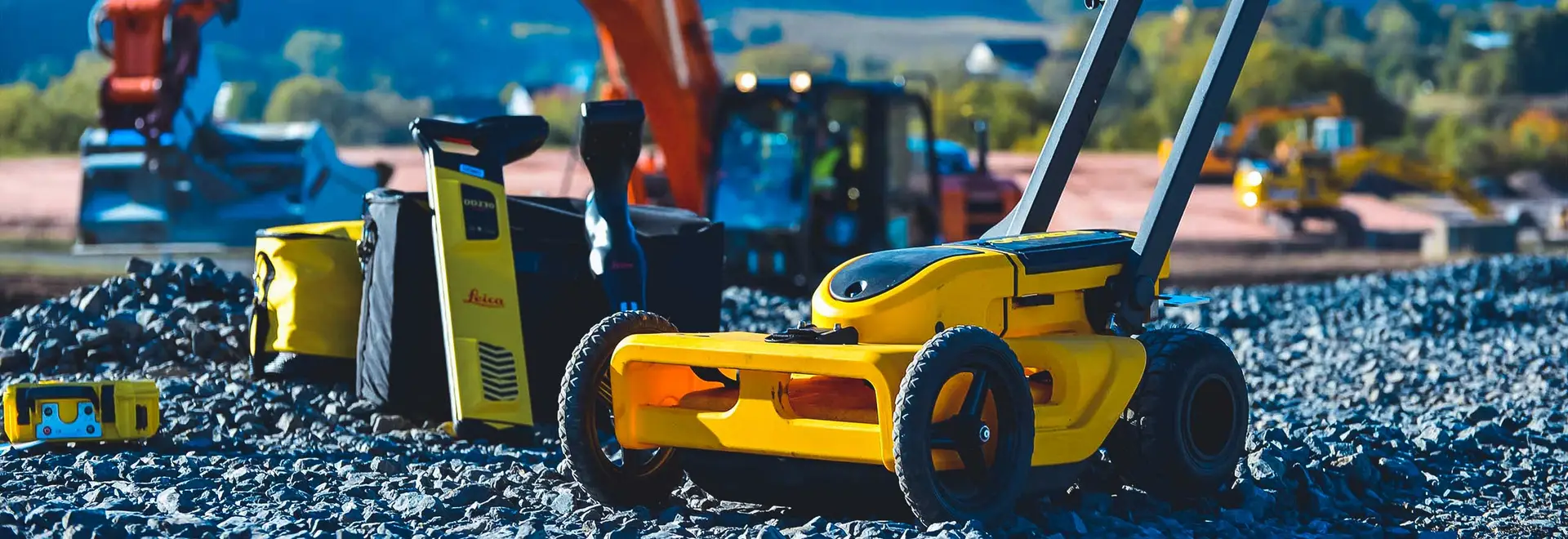
The survey brief determines the coverage, methods and deliverables.
There is no reliable universal price per square metre for every utility survey.
Compare quotations against the same extent, methods, access assumptions and deliverables.
Specify the decisions the survey must support, then focus verification on critical interfaces.
A site area tells a surveyor something about the coverage required. It says much less about the density of services, the available access, the condition of the surface or the complexity of the final record. A clear open space and a busy junction can have similar footprints and very different programmes.
The cost normally reflects a combination of preparation, fieldwork, interpretation, survey positioning, drawing production, quality checks and reporting. Access arrangements and specialist supporting works can add further tasks. The balance between them changes from project to project.
This article deliberately avoids a generic Irish day rate. A published range without a defined team, method, output and allowance for expenses can create a misleading budget. A site-specific quotation is more useful than a precise-looking number that describes a different job.
First consider access. Parked vehicles, occupied premises, traffic, restricted hours and areas requiring an escort affect how much of the site can be investigated and when. A quotation should identify the assumed working arrangements and who provides them.
Next consider the ground and the network. Congested services and difficult detection conditions can require more interpretation and supplementary investigation. The requested output matters too: a marked-up plan, a coordinated CAD drawing and a structured GIS delivery are different assignments.
Finally, allow for the people who will use the information. A drawing review, design-team workshop or targeted return visit may be more valuable than an additional layer of presentation. Make those tasks visible so they can be included or excluded deliberately.
Preparation and records review.
Site coverage, positioning and detection methods.
Traffic, access, permits and working-hour assumptions.
Verification, excavation support and reinstatement where required.
CAD/GIS outputs, report, quality checks and handover.
PAS 128:2022 is a specification, not a tariff. Requesting a survey “to PAS 128” should open a conversation about the site and method, rather than close it. State the edition in the brief so bidders work from the same reference.
Be precise about what is being commissioned and how results will be reported. Survey type B describes detection work, while achieved quality can differ between segments. A requested outcome does not make a difficult service detectable. The quote should explain how limitations and any need for further work will be handled.
Physical verification requires its own scope. Locations, access, safe working arrangements, approvals, excavation method and reinstatement can all matter. These should not be assumed to sit inside a detection-survey price unless the quotation says so.
Consider an illustrative redevelopment with several possible utility conflicts. A broad initial investigation may help the designers compare alignments. Once an option is selected, targeted verification can focus on the crossings or foundations where an error would have the greatest consequence.
That staged approach is not a reason to under-investigate a hazardous area. It is a way to connect effort to a defined decision. The team should agree which questions must be answered now, which can wait for a later design stage and which require a hold point before construction.
Ask what additional information would change the design. If the answer is “the depth and position at this crossing”, a specifically scoped verification task may add more value than a larger, undifferentiated survey. If the answer is not clear, the design brief probably needs work before the survey brief does.
Put quotations beside the same marked-up extent plan. Check whether each includes the same areas, methods, deliverables and coordination requirements. A lower total may simply exclude interpretation, traffic arrangements, reporting or a return visit.
Ask each bidder to separate fixed inclusions, provisional allowances and additional-work rates. Record the conditions that trigger extra work. This is particularly useful where access is uncertain or verification locations cannot be finalised until the initial results are reviewed.
Check the administrative details as carefully as the technical ones: VAT, travel, working hours, cancellation arrangements, lead time, deliverable review period and any limits on revisions. A clear quotation reduces disagreement because it makes the assumptions visible before mobilisation.
Same site extent and survey specification?
Same coordinate reference, drawing formats and report?
Same access, working hours and supporting works?
Clear treatment of undetected services and inaccessible areas?
Clear VAT, expenses, exclusions and additional-work terms?
Send a site plan, a description of the proposed work, the design stage, available records and the required deliverable date. Explain whether the information is for option selection, detailed design, tendering or construction planning. Those purposes do not always need the same investigation.
Include known constraints at the start. If a road cannot be occupied during normal hours, or a yard will be full of vehicles, the team can plan a realistic method and programme. Concealing uncertainty rarely removes its cost; it usually moves the conversation to a less convenient point.
Our practical recommendation is to reserve time for reviewing the results. Survey value is realised when evidence changes a design, resolves a conflict or improves the working method. A technically good report delivered after those decisions have been fixed has less opportunity to help.
A useful quote shows how the price relates to the investigation and the information you will receive. Start with the project decisions, and ask for assumptions and exclusions in writing.
Sources checked on 25 September 2026. Current guidance and policy updates belong to this reviewed edition, rather than the earlier assigned editorial date.
Specification for underground utility detection, verification and location.
Distinguishes survey types from achieved quality levels and explains undetected and assumed routes.
UK guidance used as supporting technical context, not as Irish legislation.


2 Bridge St, Athlone, Co. Westmeath, N37 F1W4
+353 (090) 640 3114
info@utilistics.ie
Mo - Fri : 08:00am - 17:30pm
Sat : 09:00am - 14:00pm